
Last Updated: October 28, 2026
Quick Summary
Washing pet bedding at a laundromat works well if you check the store's pet policy and use the right machine before loading. Wash pet bedding on a standard cotton cycle at 60°C for sanitising, and dry bulky covers in a jumbo dryer checked every 10 to 15 minutes.
- Remove loose hair by shaking, brushing, vacuuming, lint rolling and checking seams before you load.
- Wash pet bedding at least every two weeks to keep hygiene in check.
- Never machine wash memory foam cores or waterproof liners; wash covers only and air dry liners.
- Load machines about two-thirds full and turn on an extra rinse if available.
- If pet bedding is prohibited, hand wash the cover and dry it at a laundromat instead.
Table of Contents
- Check the Laundromat's Pet Bedding Rules Before You Load
- How to Remove Pet Hair From Bedding Before the Wash
- Washing Pet Bedding Temperature and Cycle Settings That Work
- How to Wash Smelly Dog Blankets Without Spreading Odour
- Is Vet Bedding Machine Washable? Care Labels and Materials
- Drying Bulky Beds and What to Do When Pet Bedding Is Prohibited
- Frequently Asked Questions
Check the Laundromat's Pet Bedding Rules Before You Load
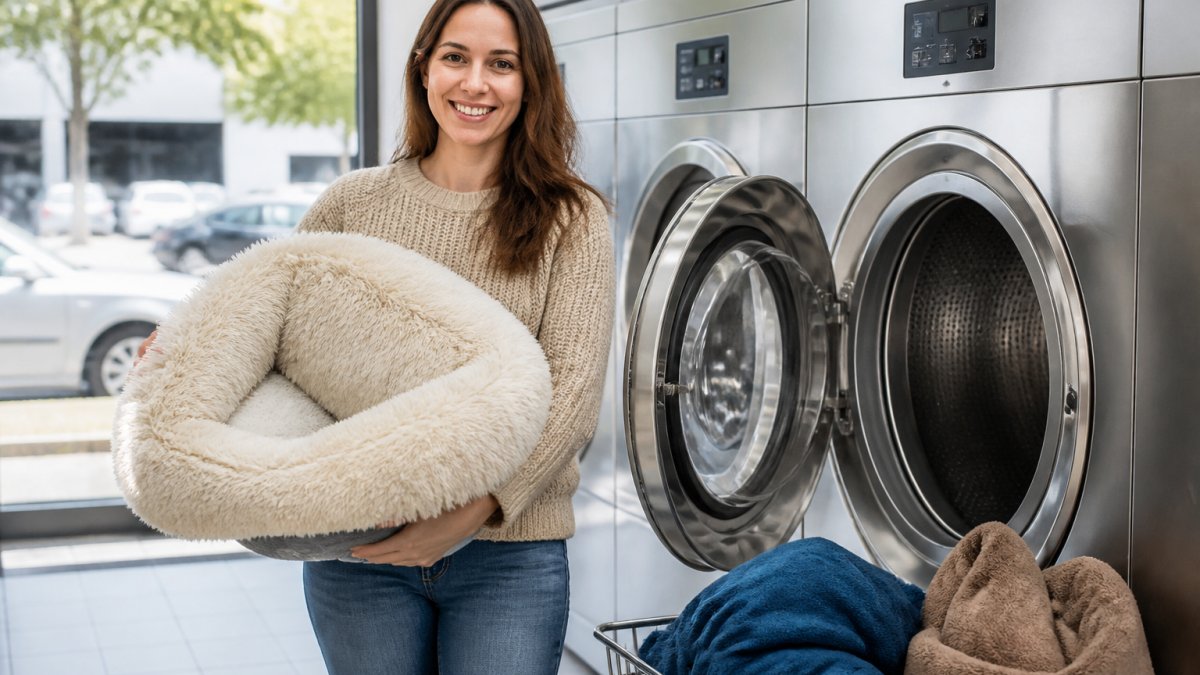
Washing pet bedding at a laundromat works well if you pick the right machine first.
At Spakleen Laundry, we run dedicated pet bedding washers and dryers at our St Kilda and Werribee stores. That setup exists because shared machines and animal bedding are a tricky mix. Experts confirm it is generally acceptable to clean pet bedding in washing machines, provided specific hygiene steps are taken to protect the machine and later loads, according to ABC News reporting on washing pet beds.
So the first job is not sorting bedding. It is reading the rules.
What a Pre-Visit Policy Checklist Should Cover
Check the store's website before you drive over:
- Do you allow pet bedding at all?
- Are there pet-only machines, or do pet items go in shared ones?
- Must loose hair be removed before loading?
- Is there a size or weight limit per machine?
- Are there posted warnings about which machines to use?
- What payment method does the store take?
A Simple Phone Script That Gets a Clear Answer
- Open with the item, not the pet. Say: "I have a large fabric pet bed cover, about the size of a doona cover. Do you allow that in your machines?"
- Ask which machine. "Should it go in a pet-only machine, or a standard large washer?"
- Confirm the prep rule. "Do you need loose hair removed before I load it?"
- Ask about drying. "Can I dry it in your jumbo dryer, or do you require air drying?"
- Close with the fallback. "If pet bedding is not allowed, do you have a recommended alternative nearby?"
What to Do When the Answer Is No
- Ask about a pet-only machine at another branch. Chains often concentrate pet machines at one or two sites.
- Ask whether the ban covers covers only or all bedding. Some stores accept removable covers but refuse foam inserts or waterproof liners.
- Hand wash the cover at home, then dry it at a laundromat. Drying is usually the harder half, and many stores will accept a damp cover for drying even if they will not wash it.
- Use a pickup and delivery laundry service that explicitly lists pet bedding.
- Book a professional pet-bedding clean if the item is orthopaedic or has a waterproof membrane.
If a store has no pet policy at all, treat that as a no. Some operators and technicians advise against washing pet bedding in standard machines because hair, dander and bacteria can transfer to other customers' clothing, per Revolution Laundry Ireland's guidance. That risk is real, and it is why pet-only machines exist.
You can see our dedicated pet washers and pet laundry policy before you bring bedding in.
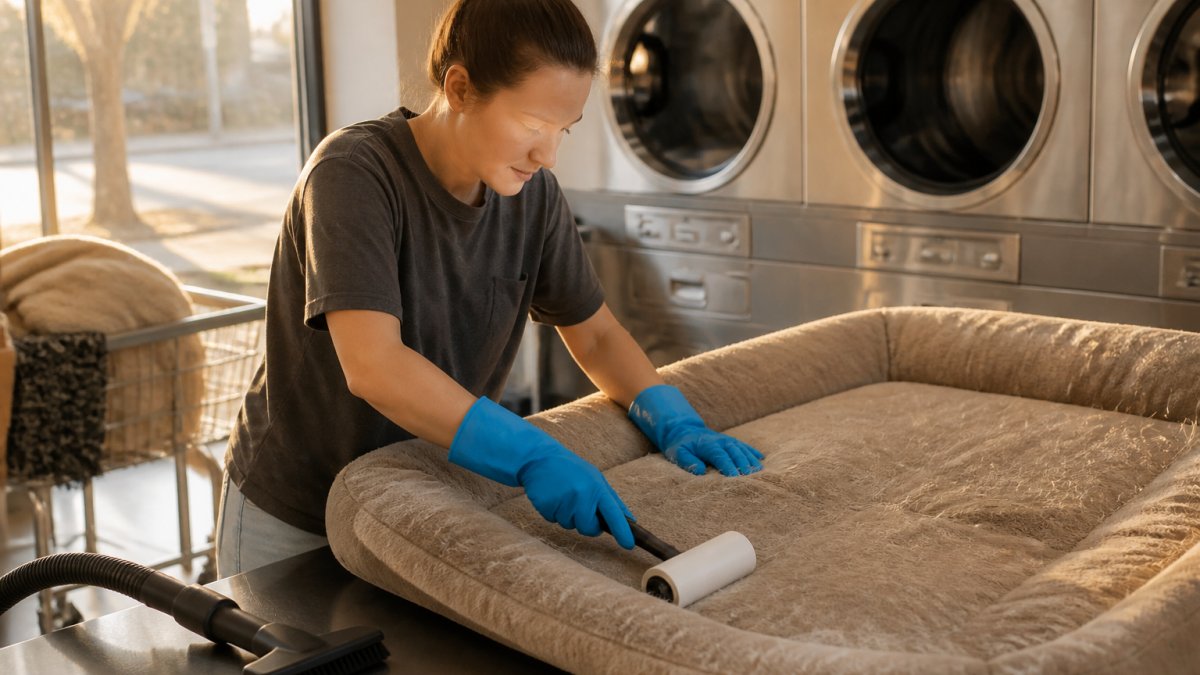
How to Remove Pet Hair From Bedding Before the Wash
Work through it in this order:
- Shake it out outdoors. Do this away from doorways and cars.
- Brush the surface. A rubber glove or stiff brush lifts hair fast.
- Vacuum both sides. Use a brush attachment, not a bare nozzle.
- Roll with a lint roller. This catches what the vacuum missed.
- Check seams and corners. Hair hides in stitched edges.
Washing Pet Bedding Temperature and Cycle Settings That Work
Washing pet bedding temperature matters more than most people expect. A standard cotton cycle at 60°C is recommended for sanitising pet bedding, according to Laveries Speed Queen's pet laundry guide. Hot water does the heavy lifting on bacteria and odour.
UGC Spakleen St Kilda
Spakleen Laundromat
| Setting | What to Choose | Why It Matters |
|---|---|---|
| Temperature | 60°C for cotton and synthetics | Kills bacteria, lifts odour |
| Cycle | Standard cotton | Balanced agitation and rinse |
| Extra rinse | On, if available | Flushes out detergent and dander |
| Spin | Medium to high | Cuts drying time |
| Load fill | Two-thirds full | Leaves room for bedding to move |
Detergent, Load Size and Machine Capacity
Our machine sizes and prices show the exact options so you can plan before you arrive.
How to Wash Smelly Dog Blankets Without Spreading Odour
- Bag it for transport. A cotton sack keeps hair and smell out of your car.
- Pre-treat stains. Rub a little detergent into soiled spots before loading.
- Remove padding. Take out foam inserts and wash covers separately.
- Run a full cycle. Do not stop a smelly load halfway.
- Wipe the drum after. A quick wipe with a damp cloth helps the next user.
Wash pet bedding at least every two weeks to keep hygiene in check, per Laveries Speed Queen's maintenance guidance. Smelly blankets usually mean you have waited too long.
Is Vet Bedding Machine Washable? Care Labels and Materials
- Cotton and canvas: Hot wash at 60°C is fine.
- Fleece and vet bedding fabric: Warm wash, low tumble dry.
- Memory foam: Cover only; never wash the foam core.
- Wool: Cold, gentle cycle or hand wash.
- Waterproof liners: Wipe clean; machine washing breaks the coating.
Drying Bulky Beds and What to Do When Pet Bedding Is Prohibited
Drying is where bulky beds defeat most people. A soaked orthopaedic cover can weigh several kilos, and an overloaded domestic dryer traps moisture in the centre, the outside feels dry while the middle stays damp and grows mildew within a day.
Choosing the Right Dryer and Cycle
| Item | Dryer size to look for | Cycle | Check interval |
|---|---|---|---|
| Small dog bed or cat bed | Standard 10-14kg dryer | Medium heat | Every 15 minutes |
| Large dog bed cover | Jumbo 21kg dryer | Medium heat | Every 15 minutes |
| King bed cover or orthopaedic cover | Jumbo 21kg+ dryer, loaded alone | Low to medium heat | Every 10-15 minutes |
| Fleece or vet bedding fabric | Standard dryer | Low heat | Every 10 minutes |
| Waterproof liner | Air dry only | , | , |
Planning Cost and Time Before You Go
Our machine sizes and prices show the exact options, and our jumbo washers and dryers handle oversized beds that will not fit standard machines.
What to Do When Pet Bedding Is Prohibited
- Use a pet-only machine at another store. Call ahead to confirm it is available and working.
- Hand wash in a bathtub, then dry at a laundromat. Use fragrance-free detergent, rinse thoroughly, and spin the cover in a mesh bag if allowed.
- Use a pickup and delivery laundry service that lists pet bedding in its accepted items.
- Book a professional clean for orthopaedic beds, memory foam cores, or anything with a waterproof membrane.
- Replace the cover rather than wash the core. Many beds have removable covers; washing the cover and airing the insert is often enough.
For bulky non-pet items, follow our guide to washing a doona.
Frequently Asked Questions
Can you wash a dog bed in the washing machine at a laundromat?
Spakleen Laundry has dedicated pet washers and dryers, separate from its normal domestic machines. Check the care label and the machine information before washing an item.
What temperature should I use to wash pet bedding?
Check the care label before washing pet bedding. Spakleen Laundry has dedicated pet washers and dryers.
How do I know whether a laundromat allows pet bedding?
Spakleen Laundry has dedicated pet bedding washers and dryers, separate from its normal domestic machines. Check the website for information before you travel.
Should I remove pet hair before washing bedding?
Yes, and it matters for two reasons. Loose hair clogs pumps and filters, and it transfers onto the next customer's load if it is left in the drum. Brush or vacuum the bed outdoors, use a rubber glove or lint roller on the fabric, then shake it out before you leave home. Sandy Creek Laundromat's 2026 operational guidance names hair removal as the primary requirement for customers washing pet bedding.
