
Last Updated: November 19, 2026
Quick Summary
Most laundromat machines can wash pet bedding, but it depends on the bedding and the machine. Always check the care label first, and if it says not machine washable, don't put it in any machine.
- Check the care label for wash tub, temperature dots and tumble-dry symbols before every wash.
- Shake bedding outdoors and brush or vacuum it to remove loose hair before you leave home.
- Use the highest temperature the care label permits, not the highest the machine offers.
- Wash pet items as their own load, separate from clothing, towels and human bedding.
- A wash cycle reduces dirt and many microorganisms but does not guarantee sterilisation.
Table of Contents
- Can You Put a Dog Bed in a Washing Machine?
- How to Wash Pet Bedding Hygienically in a Laundromat
- Keeping Pet Blankets Separate From Clothes at a Self-Service Laundromat
- Frequently Asked Questions
Can You Put a Dog Bed in a Washing Machine?
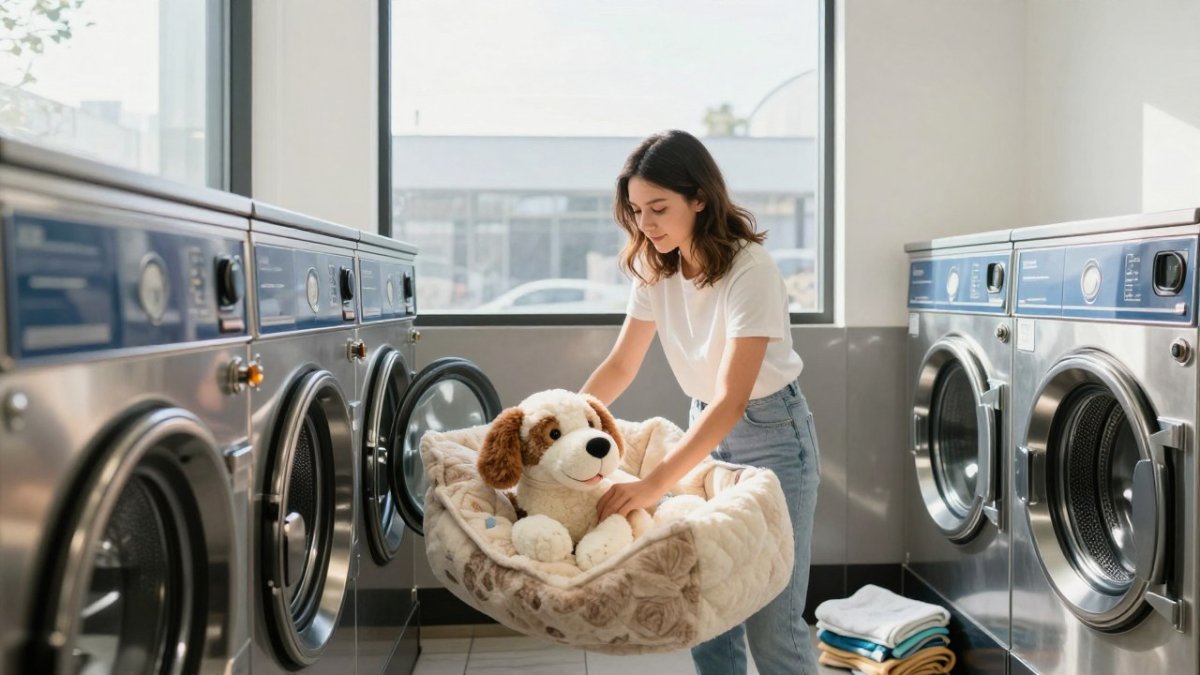
Most laundromat machines can wash pet bedding, but it depends on the bedding and the machine. Check the care label first; if it says not machine washable, don't put it in any machine.
Public machines are shared, so consider two things separately: whether the item can be washed safely, and whether the machine is clean enough for pet items. Shared machines can carry residue from other users' items, so care is worth taking, though this does not mean every laundromat machine is unsafe.
Heavy pet bedding can also be hard on standard machines. Spakleen Laundry has dedicated pet washers and dryers for pet beds, pet blankets and washable pet textiles, kept separate from normal domestic machines. Pet Bedding & Pet Laundry explains what is available.
How to Wash Pet Bedding Hygienically in a Laundromat
Step 1: Read the care label. Check the wash tub, temperature dots and tumble-dry symbols. If it says dry clean only, hand wash only or do not tumble dry, don't use a public washer or dryer.
Step 3: Pre-treat stains and odours sensibly. Pet accidents, drool and body oils respond better to a short pre-soak or spot treatment with a fabric-suitable detergent.
Step 4: Choose a cycle and temperature the label allows. Warm water and a regular or gentle cycle suit most washable synthetic-fibre pet covers, while cotton covers often tolerate a warmer wash.
Step 6: Load the machine so the item can move. A pet bed crammed into a small drum won't rinse or spin properly, so choose a machine with enough capacity for the bedding to tumble freely and wash pet items on their own. Check machine sizes and cashless payment options on our self-service laundromat page before you visit.
Step 7: Check the machine before and after use. Look inside the drum and around the door seal for hair, grit or leftover debris.
Step 8: Dry thoroughly, but only as far as the label allows. Damp pet bedding can develop mustiness and, in humid conditions, mould.
Step 9: Wash your hands and clean your bag afterwards. Pet bedding can carry hair, dander and, in some cases, parasites.
Watch out: A wash cycle reduces visible dirt and many microorganisms, but it does not guarantee sterilisation.
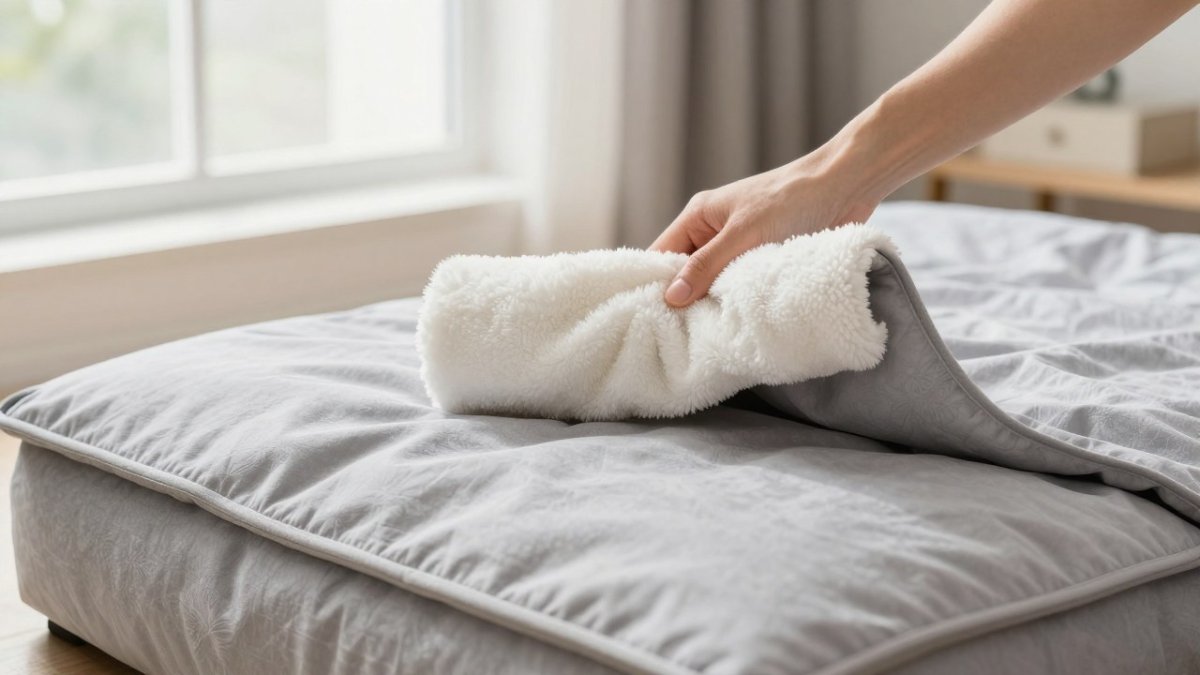
The steps below summarise the washing routine the article recommends, with the timing or frequency for each.
| Step | What to do | Time or frequency |
|---|---|---|
| Read the care label | Check wash tub, temperature dots and tumble-dry symbols | Before every wash |
| Remove loose hair | Shake outdoors, then brush or vacuum both sides | Before leaving home |
| Pre-treat stains | Pre-soak or spot treat with fabric-suitable detergent | Follow product label |
| Choose cycle and temperature | Warm water and gentle cycle for synthetic covers | Highest temperature the label allows |
| Dose detergent | Use label dose for load size and water hardness | Per load |
| Load the machine | Leave room for the bedding to tumble freely | Wash pet items on their own |
| Check the machine | Look for hair, grit or debris in drum and door seal | Before and after use |
| Dry thoroughly | Follow label heat and check at intervals | Remove slightly warm, then air fully |
Keeping Pet Blankets Separate From Clothes at a Self-Service Laundromat
Separating pet items from clothing is a useful habit at a shared laundromat. It helps protect your clothes and other customers' loads from hair and residue, and gives pet bedding room to move in the drum.
Use a separate bag for dirty and clean pet items. Bring a dedicated bag or basket for pet bedding and keep it apart from clothing both ways. If the bag is reusable, wipe or wash it after each trip.
Run pet items as their own load. Don't mix pet blankets with towels, clothing or human bedding, even if the machine has spare capacity. A separate load lets you choose a suitable cycle and temperature, and keeps hair and residue in one wash.
Check the machine and the rules before you commit. Laundromat policies on pet items vary and aren't always advertised online. Check the operator's website for posted rules, look for in-store signage and ask staff if anything is unclear.
Clean up after your load. Wipe the door seal, check the drum for hair and remove lint from the filter if it's accessible to customers. Leave the machine as you'd want to find it.
Local context for St Kilda and Werribee customers. Spakleen Laundry operates self-service laundromats at 105A/33 Inkerman Street, St Kilda VIC 3182, and Shop 2/116 Watton Street, Werribee VIC 3030. View the St Kilda laundromat or the Werribee laundromat for current store details, and see washer and dryer prices before you go.
Watch out: Pets should never be brought into a laundromat or placed inside a washer or dryer, even briefly. This article is about washing pet items, not housing animals in machines.
Frequently Asked Questions
Are laundromat machines safe for washing pet bedding?
They can be, provided the machine is clean and the bedding's care label allows machine washing. Shared machines may carry residue from other users' items. That does not show every machine is unsafe. Check the care label, use a hot or recommended cycle where the label permits, and wipe the drum and door seal before loading. Heavy pet bedding can also strain some machines, so ask staff whether a larger or dedicated machine is available.
Can you wash pet bedding in the same machine as your clothes?
You can, but washing pet bedding separately from clothes is the safer habit. Pet hair, dirt and oils can transfer to clothing, and clothing residue can end up in pet bedding. Wash pet items on their own cycle, rinse the machine if you can, and dry them thoroughly before mixing them with household laundry. If the care label says the item should be hand washed or dry cleaned, follow that instruction instead of using a machine.
How do you remove pet hair from blankets before washing?
Shake the blanket outdoors or over a bin to dislodge loose hair, then brush it with a rubber-bristled or lint brush. Work in one direction, starting from the top and moving down. Once most of the hair is removed, pre-rinse or shake out the item again before loading it. Removing hair first reduces the chance of clogged lint filters and fur left on other laundry.
