

Quick Summary
Wash and fold is worth the cost when your time is worth more than the price difference, especially for households doing several loads a week or lacking a home washer and dryer. For a single small load you could wash in an hour at home, it rarely makes sense.
- Compare the true cost at home, including electricity, water, detergent, depreciation and your own time.
- Ask whether quotes are charged on dry weight and whether a minimum charge applies.
- Families doing four or more loads a week most often find wash and fold justified.
- Bulky items like king-size doonas are usually better value at self-service than per-kilogram service rates.
Table of Contents
- How Wash and Fold Works at a Glance
- Wash and Fold Cost in Melbourne: What You Actually Pay
- Wash and Fold vs Self-Service Laundry
- Washing Doonas and Bulky Items at a Laundromat
- Book Your Pickup or Visit Spakleen for Your Next Load
- Frequently Asked Questions
7 Costs of Wash and Fold: Is It Worth Paying For?
Last Updated: November 8, 2026
How Wash and Fold Works at a Glance
Is wash and fold worth the cost? For most people, the answer depends on what doing laundry at home actually costs them, not just what the service charges. Spakleen Laundry offers self-service and pickup-and-delivery options, and this trade-off comes up often for households and small accommodation hosts.
Wash and fold is a service where someone else collects your clothing, washes and dries it, folds it and returns it to you. You pay for the labour and convenience rather than the water or the machine. Most services price by weight or by bag, and many add a minimum charge for small orders.
Here is the short version. Wash and fold usually makes sense when your time is worth more than the price difference, when you lack in-unit machines, or when you need bulky items washed without owning a large machine. It rarely makes sense for a single small load you could wash in an hour at home.
Australian Consumer Law guidance on service pricing
Wash and Fold Cost in Melbourne: What You Actually Pay
Pricing depends on load weight, service type and whether pickup and delivery are added. Check the current rates on the Spakleen Laundry pricing page or request a quote before you compare options. What we can do is show you exactly how to read a quote and how to build the true cost of the alternative, so the comparison is like-for-like rather than guesswork.
Wash and fold is almost always priced by weight or by bag, not by the hour. That means your total depends on three things: the per-kilogram rate, the minimum charge, and whether pickup, delivery and folding are bundled or added on. A quote that looks cheap per kilo can lose its advantage once a minimum order and a delivery fee are applied to a small household load.
When you read a quote, ask these questions in this order:
- What is the per-kilogram rate, and is it charged on washed weight or dry weight? Dry weight is the fairer basis and the one to compare against.
- Is there a minimum charge? A minimum order of several kilograms can make a two-person household pay for capacity it does not use.
- Are pickup and delivery included, and is there a delivery fee or a radius limit? A 25km pickup radius, for example, may exclude outer suburbs.
- Is folding included, and is ironing extra? Ironing is usually a separate line item and can double the effective cost per item.
- Are doonas, rugs and bulky items priced differently? They often are, because they consume machine capacity rather than weight.
For self-service, the price is set per machine, so check the current machine prices on the Spakleen Laundry pricing page. Use those figures to compare against any wash and fold quote, including any per-kilogram rate and minimum charge.
What Doing Laundry at Home Really Costs
The sticker price of a home wash is only part of the story. Detergent, water, electricity and the wear on your machine all add up, and many people forget the time. A common mistake is comparing the service price against the cost of detergent alone.
A more honest Australian comparison adds up five components over a year:
- Electricity, a warm or hot wash and a dryer cycle are the two biggest energy draws. Cool washes and line drying cut this sharply, which is why a home laundry that air-dries is far cheaper per load than one that tumble-dries.
- Water, a front loader uses noticeably less water per kilogram than a top loader, so the same household can have very different water costs depending on the machine.
- Detergent and consumables, powder, liquid, stain remover and fabric softener, priced per load rather than per bottle.
- Appliance depreciation and repairs, a domestic washer and dryer have a finite life, and every load you run at home brings the replacement date closer. Divide the purchase price by the expected number of loads to get a per-load depreciation figure.
- Your time, sorting, loading, transferring, hanging or drying, folding and putting away. For a household doing several loads a week, that time often matters more than the cents saved per load.
Run the sum for your own week before deciding. A household that air-dries, uses a modern front loader and does three loads a week will usually find the home cost per load low enough that wash and fold is a pure time purchase. A household that tumble-dries every load, pays for hot water and replaces a machine every few years will find the gap much narrower.
Watch out: comparing a wash and fold quote against the price of detergent alone is the single most common error in this decision, because it ignores electricity, depreciation and your own hours.
Australian Consumer Law guidance on service pricing
Wash and Fold vs Self-Service Laundry
Self-service sits between doing it at home and paying for a full service. You get access to large-capacity machines, including 27kg washers and 21kg jumbo dryers, but you still do the sorting, loading and folding yourself.
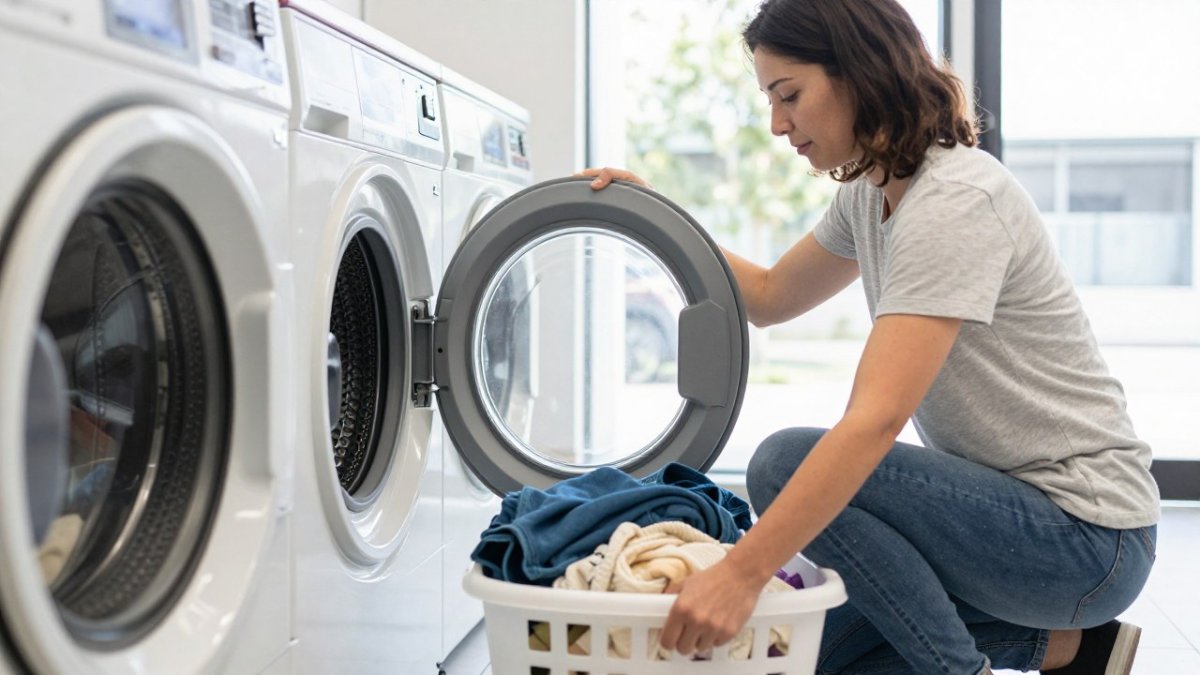
The useful question is not which option is cheaper in the abstract, but where the break-even point sits for your household.
Here is how the trade-off tends to play out by household type:
- Single person, one small load a week. Self-service or home washing usually wins. The volume is too low to clear any minimum charge on a wash and fold order, so you pay a premium for capacity you do not use.
- Couple, two to three loads a week. The break-even depends on whether you air-dry. If you have a dryer at home, the DIY cost is low and wash and fold is a time purchase. If you do not, the laundromat's jumbo dryers save hours of indoor drying.
- Family with children, four or more loads a week. This is where wash and fold most often justifies itself, because the time cost compounds and the volume is high enough to clear minimum charges comfortably.
- Share house or small accommodation host. Volume is high and unpredictable, and turnaround matters. A pickup-and-delivery service with a fixed schedule removes the coordination problem entirely.
For bulky items, self-service is often the better value even for regular wash and fold customers. A king-size doona or a soft rug uses machine capacity rather than weight, so paying a per-kilogram service rate for a light but bulky item is poor value.
The real question is how much your time is worth. If an hour at the laundromat frees up an evening, a pickup-and-delivery service may be the better value. If you enjoy a quiet hour with a book while the machines run, self-service may be all you need.
Watch out: a wash and fold quote that looks competitive per kilogram can become the most expensive option once a minimum charge and a delivery fee are applied to a light weekly load, always calculate the cost of your actual weekly volume, not the headline rate.
Choice guidance on comparing household service costs
The article breaks down how the trade-off plays out for different household types:
| Household | Typical loads per week | Likely best option |
|---|---|---|
| Single person | One small load | Self-service or home washing |
| Couple | Two to three loads | Depends on air-drying or home dryer |
| Family with children | Four or more loads | Wash and fold often justified |
| Share house or small accommodation host | High and unpredictable | Pickup-and-delivery with fixed schedule |
Washing Doonas and Bulky Items at a Laundromat
Large items are where home machines struggle most. A king-size doona can be too heavy or too bulky for a standard domestic washer, and drying one at home takes a long time.
Our 27kg washers and 21kg jumbo dryers are designed for bulky loads such as king-size doonas and rugs. Check the item label first and avoid anything that cannot be machine washed.
For occasional bulky washing, a laundromat often beats paying for a full service. You pay only for the machines you use, and you avoid tying up your own washer for hours.
Book Your Pickup or Visit Spakleen for Your Next Load
Ready to decide? If you want the machines and do not mind doing the work, visit one of our St Kilda or Werribee locations. We are open daily from 6:00AM to 1:00AM, with no booking required for self-service.
If you would rather skip the trip, our pickup and delivery service covers a 25km radius. Contact us to arrange your first collection.
Why wash and fold can be worth it: when your time is worth more than the price difference, when you lack in-unit machines, or when you regularly wash bulky items. Run the numbers against your own week, and check current prices with Spakleen Laundry before you commit.
Frequently Asked Questions
Is wash and fold worth the cost?
It depends on how much time you value and how often you do laundry. Wash and fold saves the hours spent washing, drying and folding, which matters most for busy households and people without in-unit machines. For occasional small loads, self-service at a laundromat or home machines may cost less. Compare the price per load with what your own time and travel are worth to you before deciding.
How much does wash and fold cost in Melbourne?
Pricing depends on load weight, service type and whether you add pickup and delivery. Spakleen Laundry does not publish fixed prices in this article, so check the current pricing on the Spakleen Laundry website or request a quote for your load. Ask about minimum charges and any extra fees for bulky items before booking.
Can a laundromat wash a king-size doona?
Yes, large-capacity machines can handle bulky items such as king-size doonas and rugs that often do not fit in a home washing machine. Spakleen Laundry offers 27kg washers and 21kg jumbo dryers in its Werribee and St Kilda locations. Check the machine capacity and drying time before you go so you can plan your visit.
